Category
Pattern design – for an hotel room and clothing
Date
January 2025 – June 2025
Used programs
InDesign, Photoshop, Illustrator
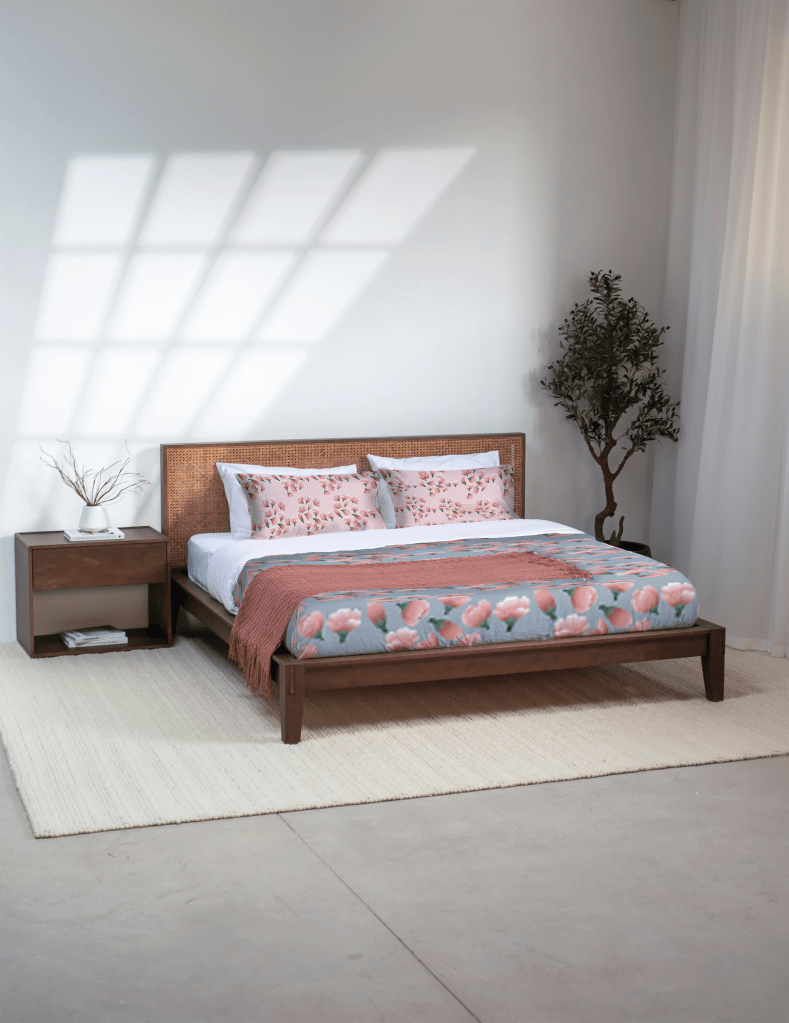
This is a pattern design created for a hotel room. To develop the design, I conducted research across various categories of pattern design, focusing on different time periods and cultural influences. The styles I explored included Scandinavian, Mediterranean, Art Nouveau, Baroque, and Asian pattern design.
After completing my research, I decided to focus on Asian pattern design, with a particular emphasis on traditional Japanese aesthetics.
I was especially drawn to the floral kimono patterns worn by Geishas and the poetic elegance of the Edo period. Inspired by the fleeting beauty of cherry blossom season, the designs are soft, organic, and nature-focused.
Traditional Japanese interior patterns often featured spot illustrations — like individual branches or scenic motifs — but this project required seamless, full-surface patterns. To meet this requirement, I translated the essence of historical Japanese motifs into slightly modern, simplified, and repetitive designs suitable for large-scale surfaces.
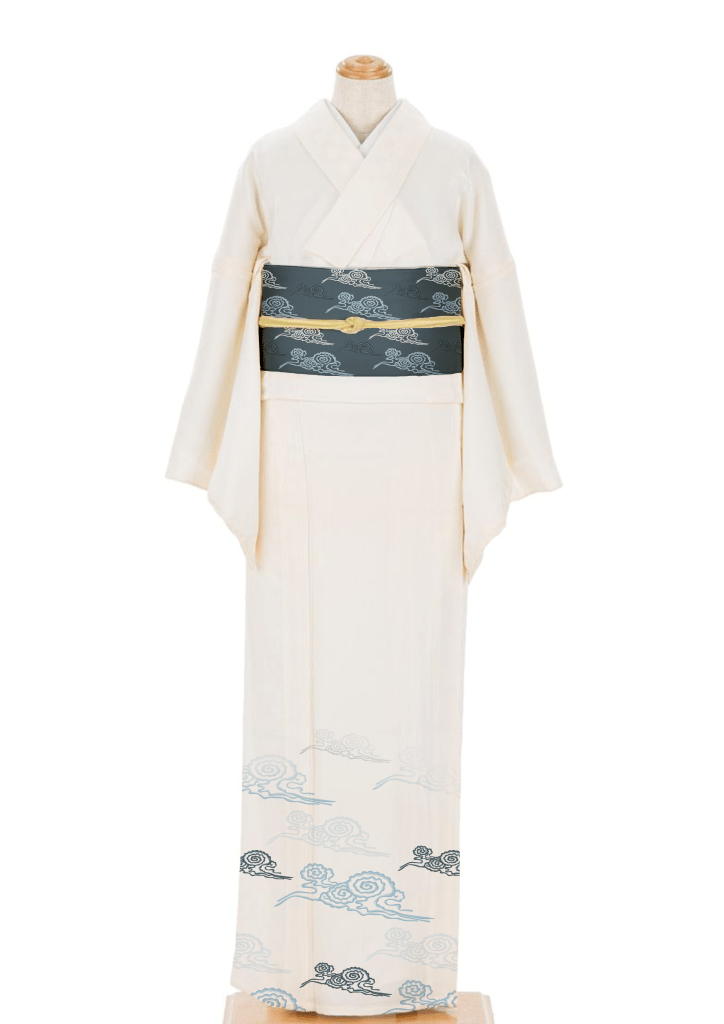
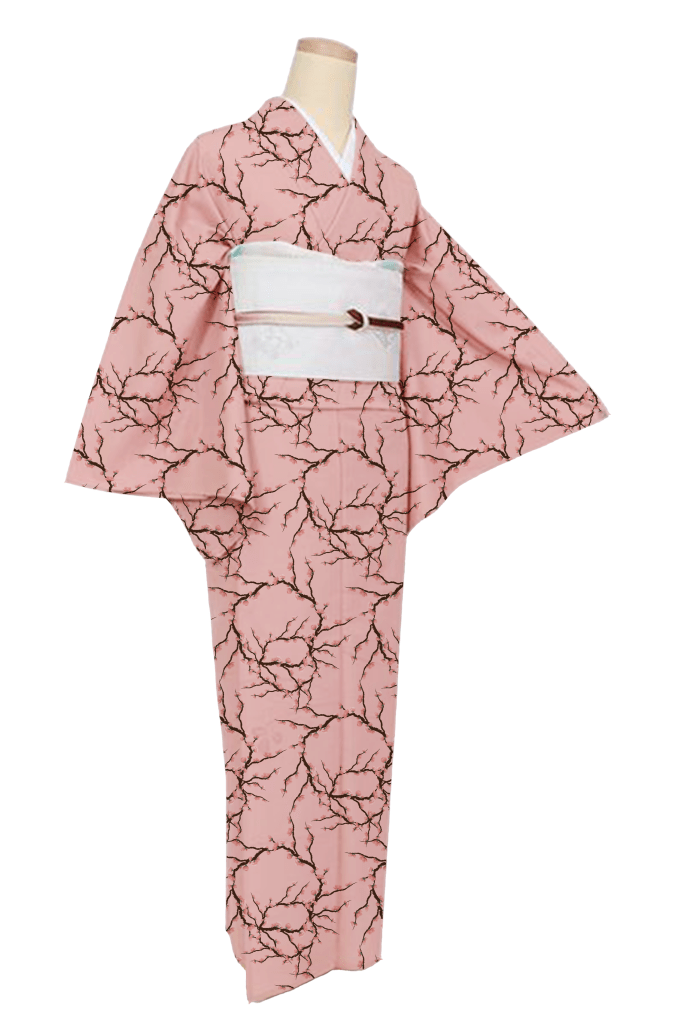
Since kimonos traditionally featured continuous, flowing patterns, I created a separate kimono-inspired clothing collection to further explore this visual language — allowing the designs to live in a context closer to their cultural origin.
Both the room design and the kimono collection are dedicated to a historical Geisha who played an important role during the Edo period. Her life and legacy became a central inspiration for this project — keep reading to learn more about her story and how it shaped the visual narrative.
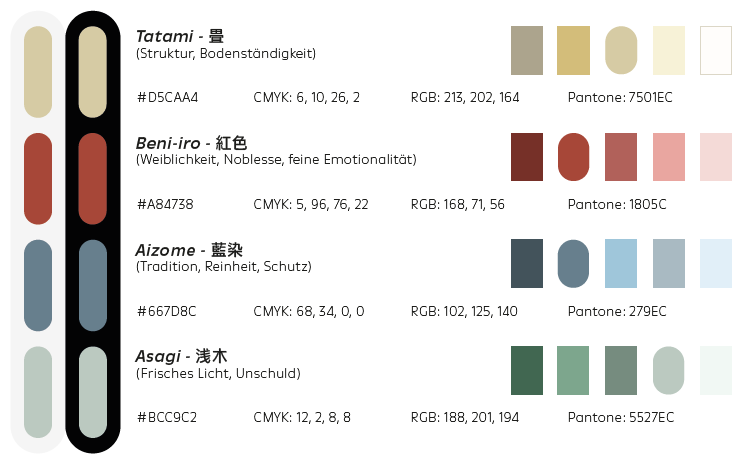
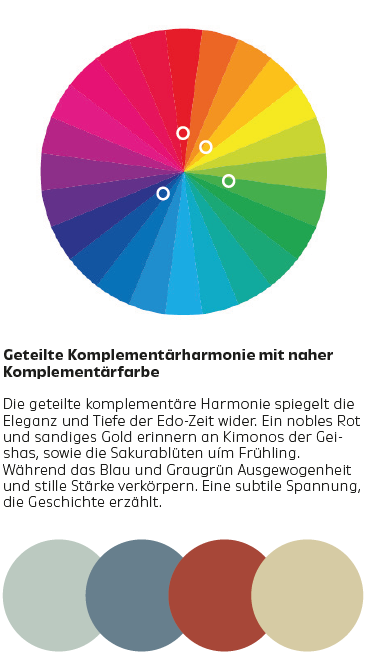
Split Complementary Harmony with a Near Complementary Color
The split complementary harmony reflects the elegance and depth of the Edo period. A noble red and sandy gold evoke the kimonos of Geishas and the cherry blossoms in spring.
Meanwhile, the blue and muted green embody balance and quiet strength. A subtle tension that tells a story.
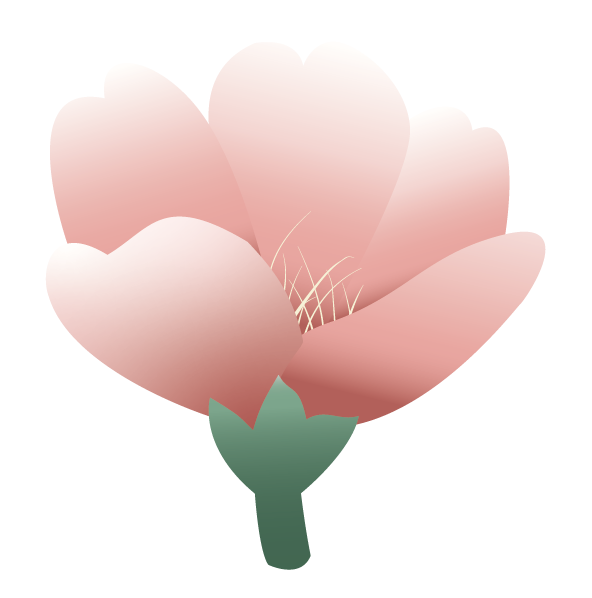
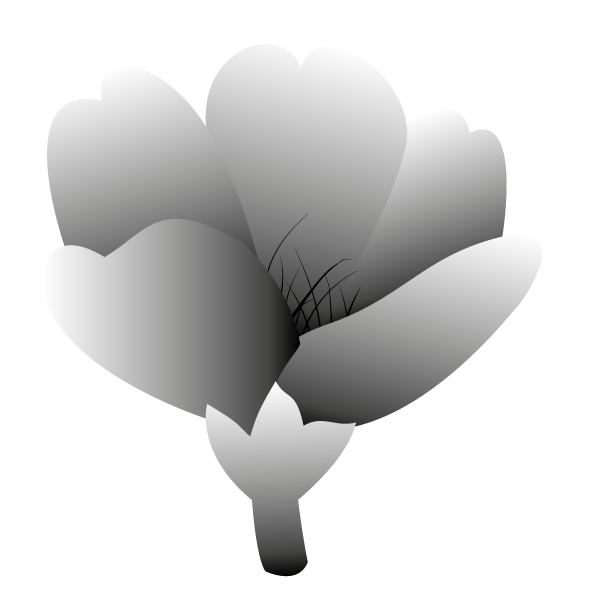
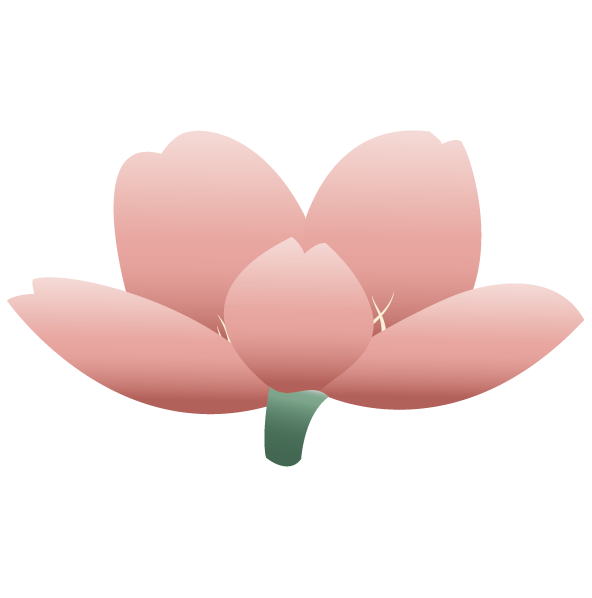

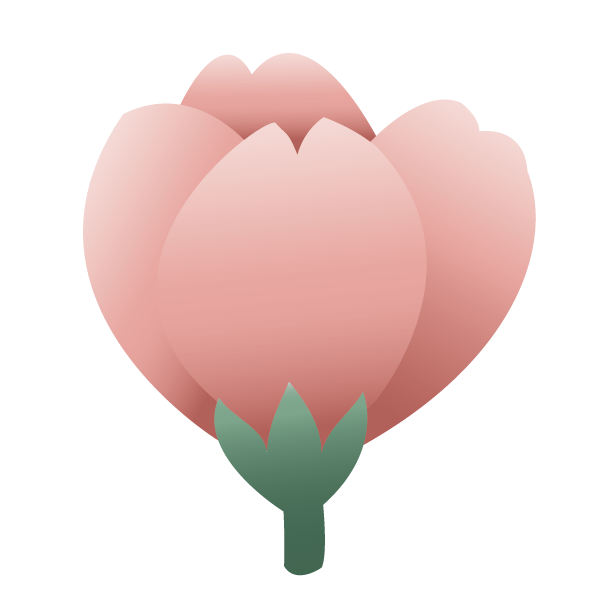

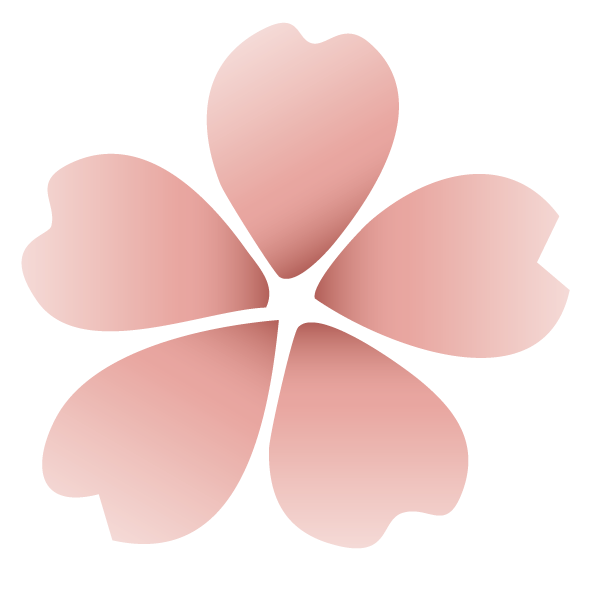





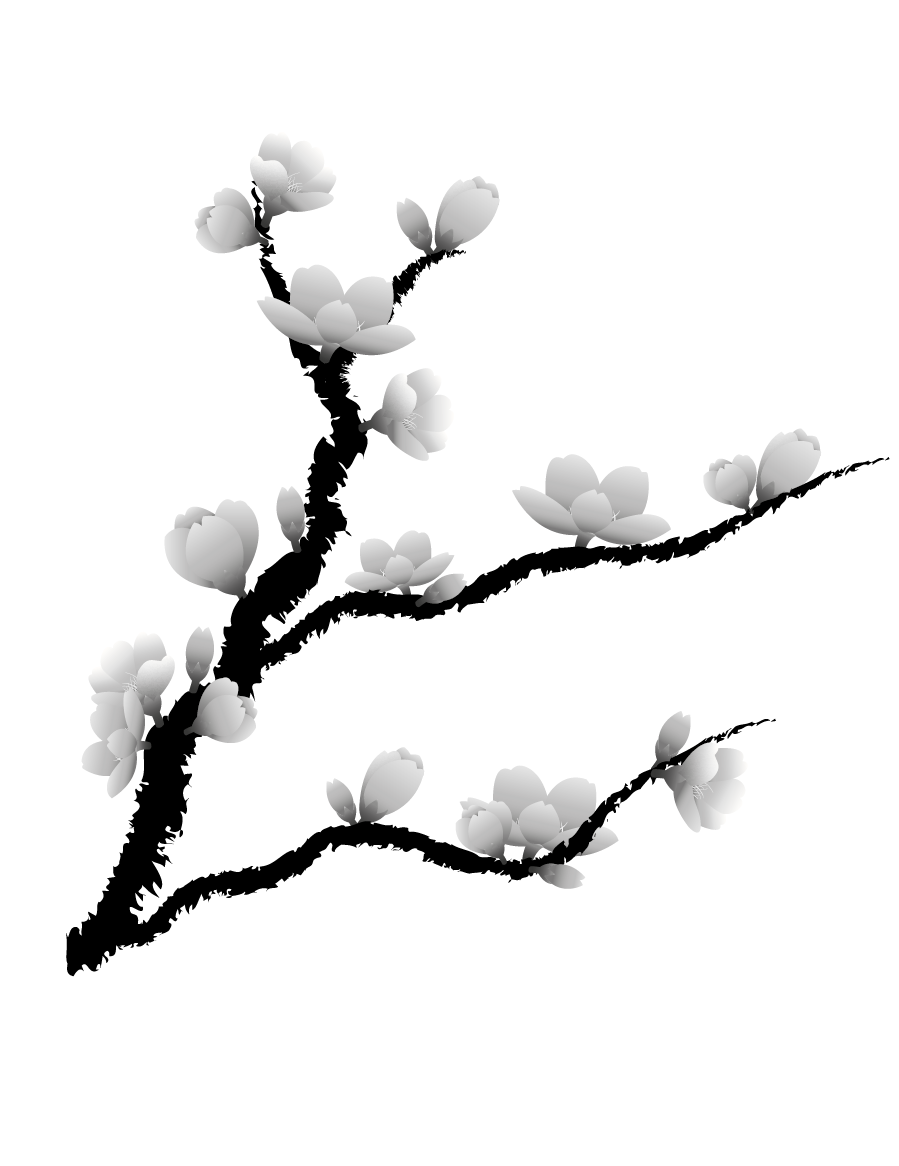
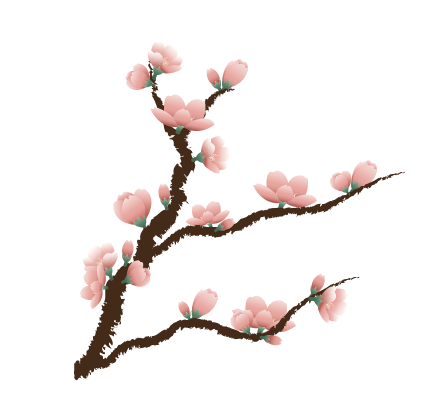
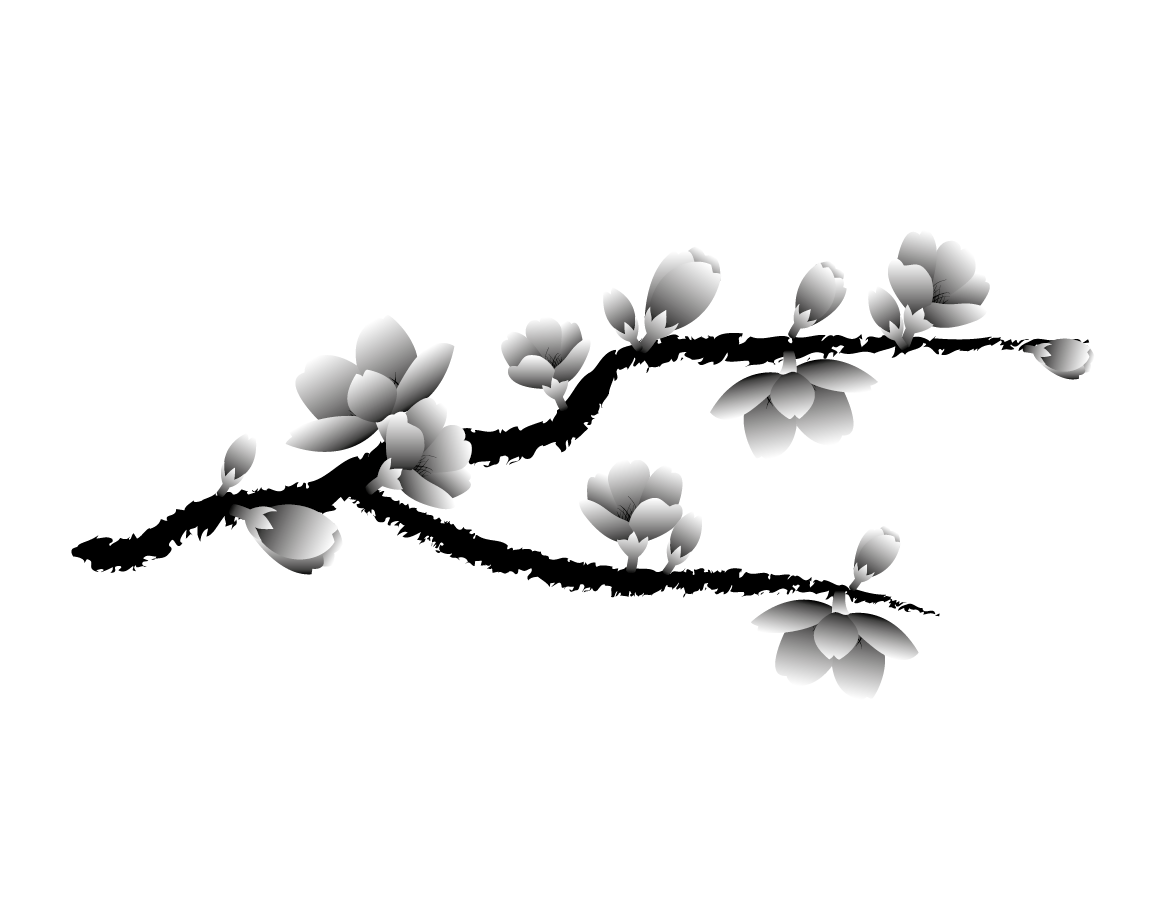

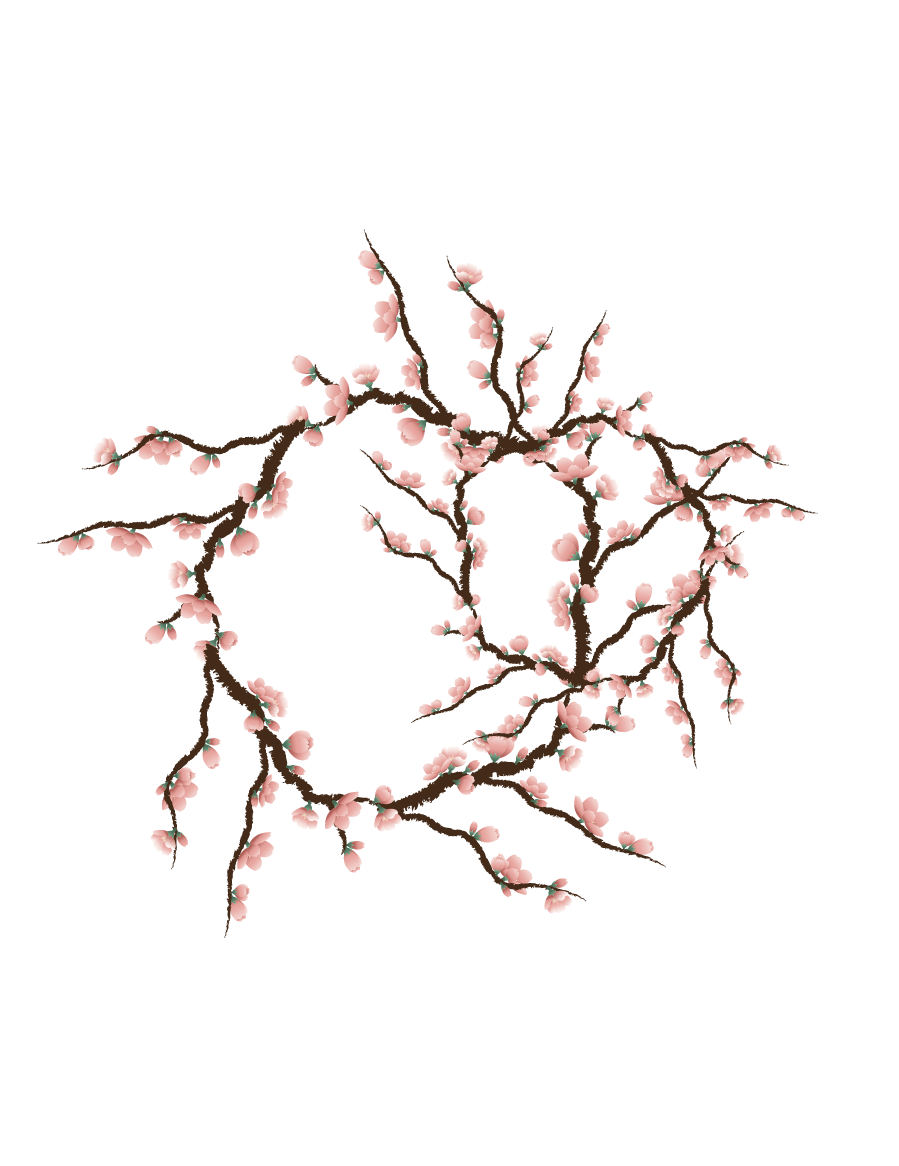

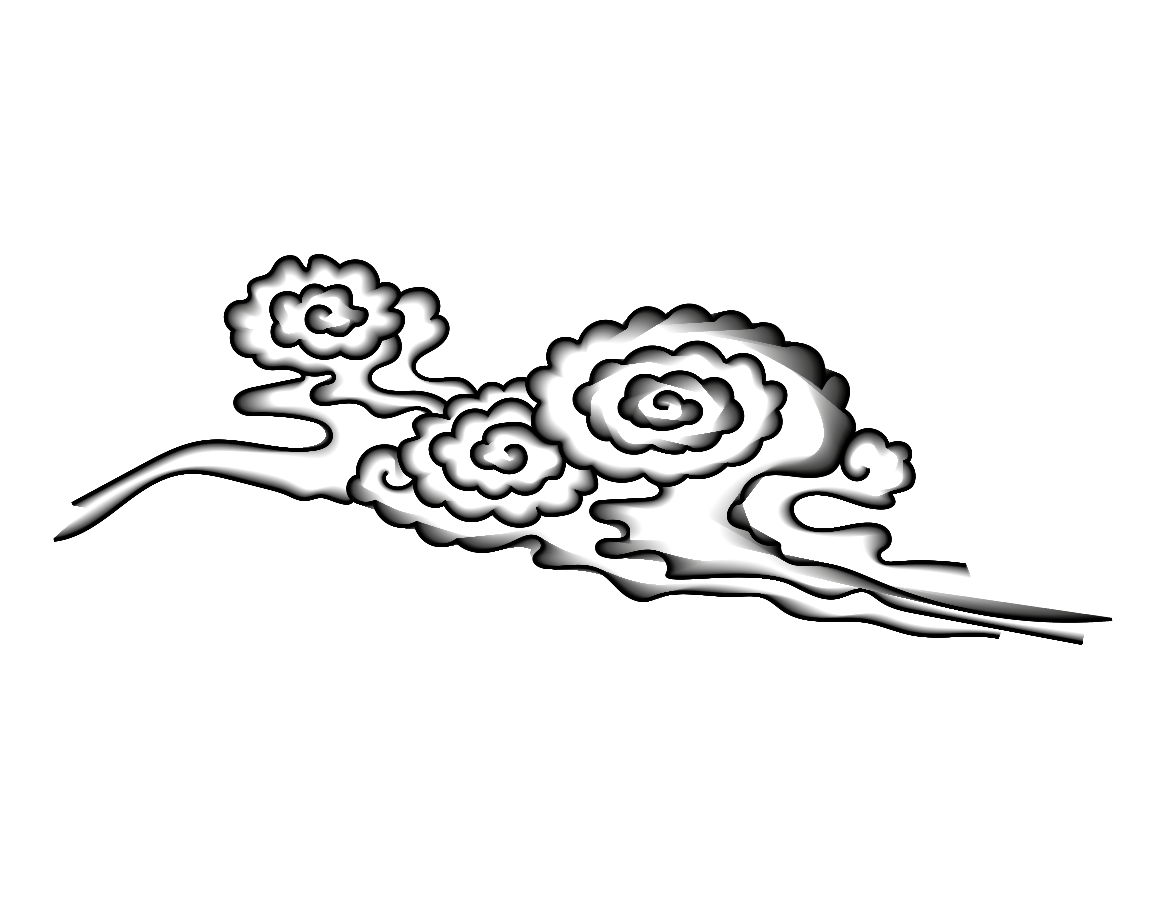
Each individual design element is available in its finalized color palette with subtle gradients, as well as in a black-and-white version — allowing for flexible use and easy adaptation across different design contexts.
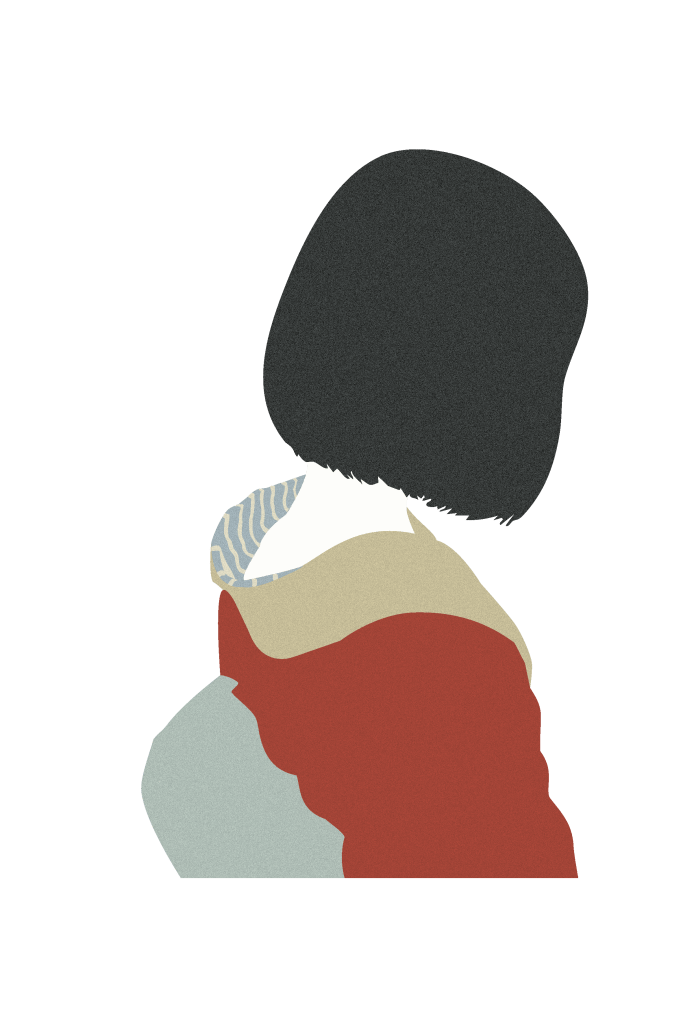
Spot Graphic – Above the Bed
“She gazes quietly into a world that cannot be seen — but can be felt.
– M. Chalard
A young girl, captured in her stillness, carries the softness of a blossom slowly unfolding.
Above the bed, her silhouette watches over the room like a silent promise:
That growth can be quiet.
That trust can take root from within.
And that even from past shadows, a light can emerge — gentle, calm, and wholly at peace.
A room like a silent garden: holding the stillness of the Edo period,
the rhythm of old patterns,
and the space to feel at home within oneself.”
Yūgiri Tayū – 夕霧太夫 – ゆうぎり たゆう
Yū (夕) – Evening
Giri (霧) – Mist
Tayū (太夫) – The highest rank of an Oiran — a woman of great education, artistic mastery, and grace.
Her birth year is unknown, but she was born in Saga (Kyōto).
Her given name was Teru (照).
She died on the 6th day of the 1st month of Enpō 6 (February 26, 1678),
presumably at the young age of only 27, in Ōsaka.
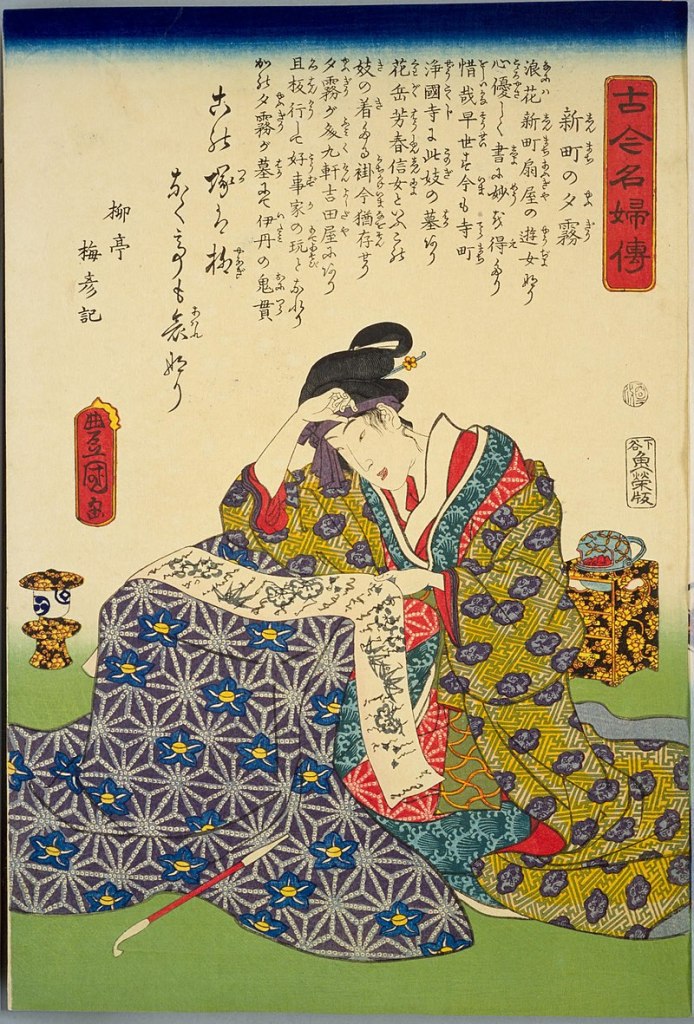
Yūgiri Tayū was one of the most famous tayū (highest-ranking courtesans) of the early Edo period. Alongside Yoshino Tayū and Takao Tayū, she is counted among the legendary “Three Great Beauties of the Kan’ei Era” (Kan’ei San Meigi – 寛永三名妓) and is still considered an ideal of refined femininity in 17th-century Japan.
Trained as a tayū in the prestigious Ogiya house in the pleasure district of Shimabara, she relocated with the same house to Shinmachi (Ōsaka) in 1672, becoming the first tayū ever active in Ōsaka.
Yūgiri mastered numerous traditional arts, including singing, koto and shamisen performance, calligraphy, and poetry. The writer Ihara Saikaku portrayed her in 1684 in Haikai Nyokasen as a “master of all the arts,” and preserved her famous hokku about her family crest, the paulownia leaf.
Her tragic love affair with the merchant Fujiya Izaemon inspired numerous pieces in both puppet and kabuki theater, including Kuruwa Bunshō (久留和文章) and Yūgiri Nagori no Shōgatsu (夕霧なごみの正月). The couple “Yūgiri and Izaemon” became a lasting symbol on the Edo stage.
Yūgiri died on the 6th day of the 1st month of Enpō 6 (February 26, 1678), at the young age of just 27, in Ōsaka. She was buried at Jōkoku-ji Temple (Shitadera-machi), with a second grave located at Seiryō-ji Temple in Kyōto.
Even in her own time, she was celebrated as the embodiment of grace, education, and compassion. To this day, Yūgiri Tayū remains a symbol of the dazzling culture of the pleasure quarters — and of the ephemeral beauty so often evoked in Edo-period haiku.
HANA NO YUKUE – 花のゆくえ
“The Path of the Flowers”
The poet Ihara Saikaku mentioned Yūgiri Tayū in his 1684 work Haikai Nyokasen and composed a hokku (a precursor to the haiku) referencing her family crest — the paulownia tree (kiri). The verse reads:
Kiri no ha mo / somewake-gatashi / sode no ma
– I. Saikaku
桐の葉も/そめわけがたし/袖の間
Even the paulownia leaf
is hard to tell apart
between the folds of my sleeves.
This poem evokes both elegance and subtle melancholy — blurring the line between nature and garment, identity and ornament.
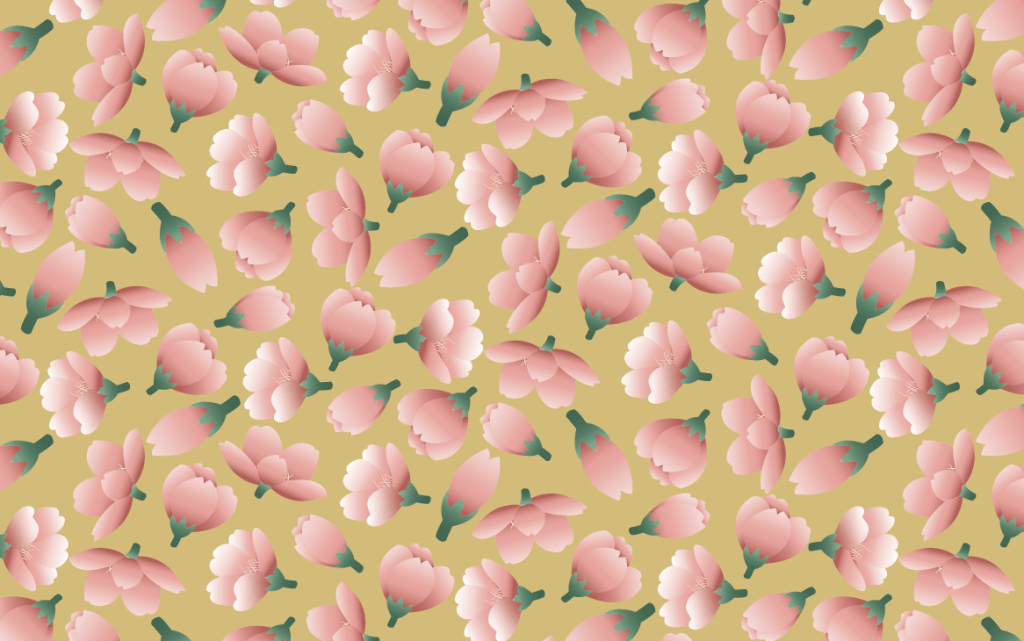
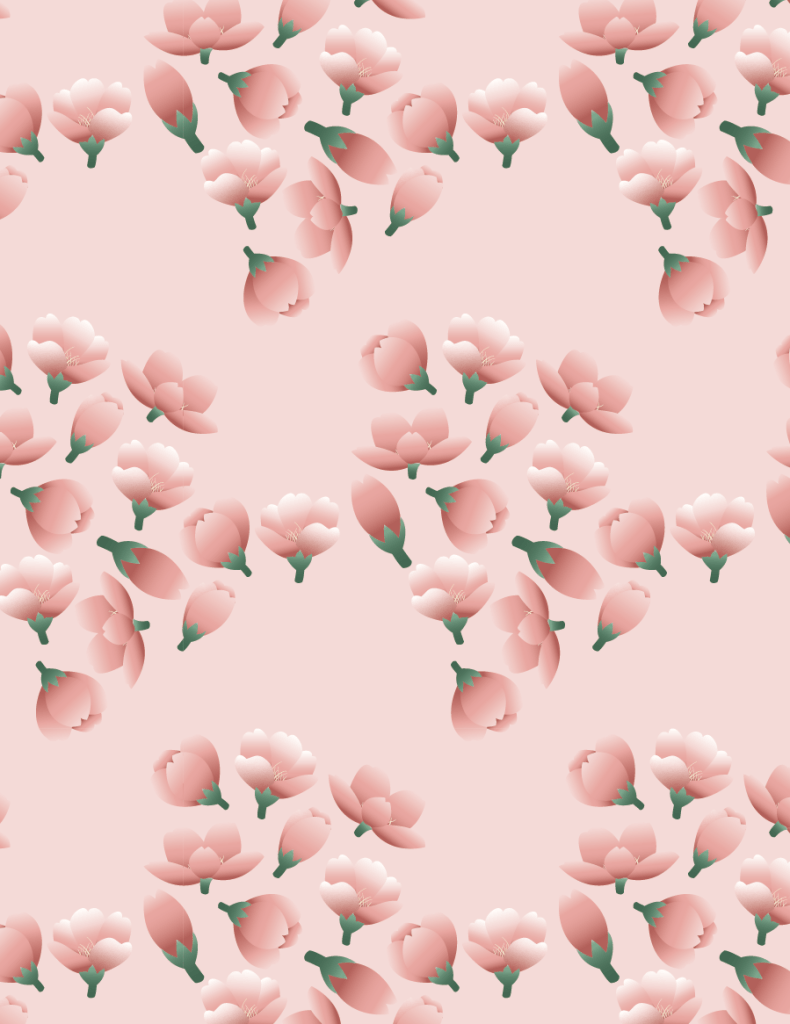
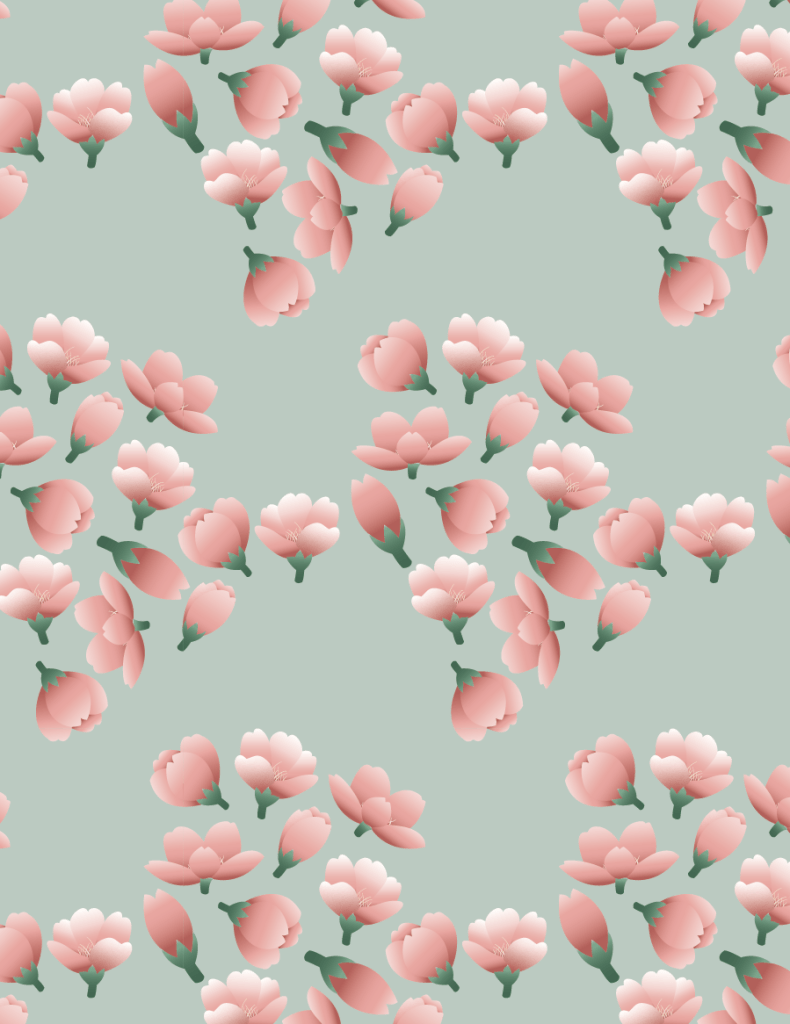
SAKURA CHIRASHI – 桜ちらし
“Scattered cherry blossoms”
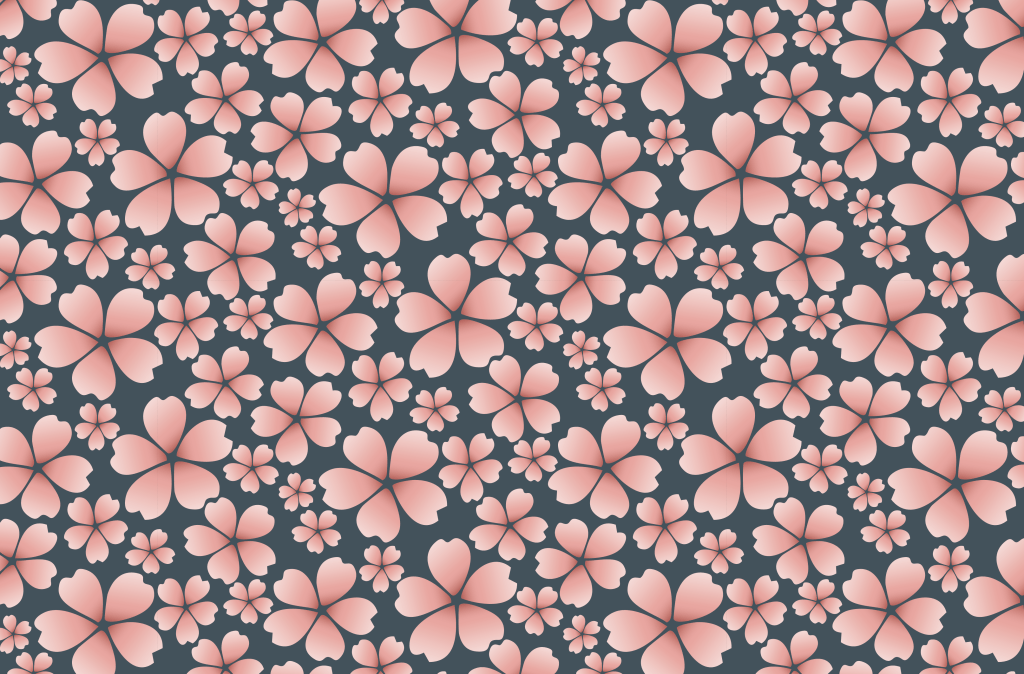

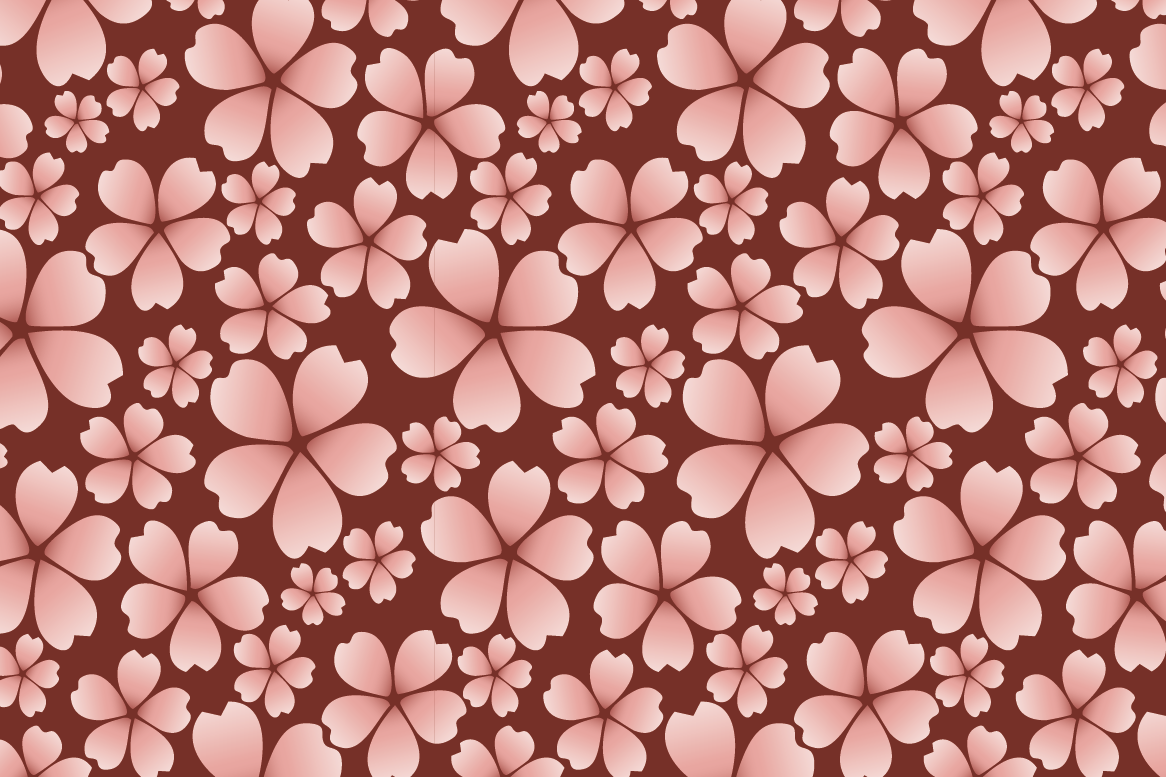
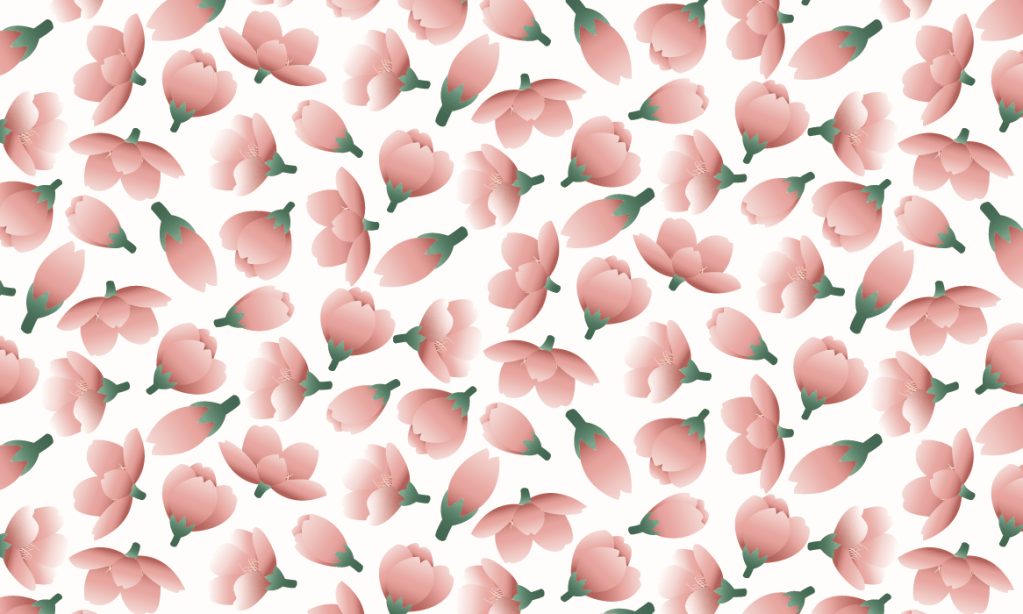
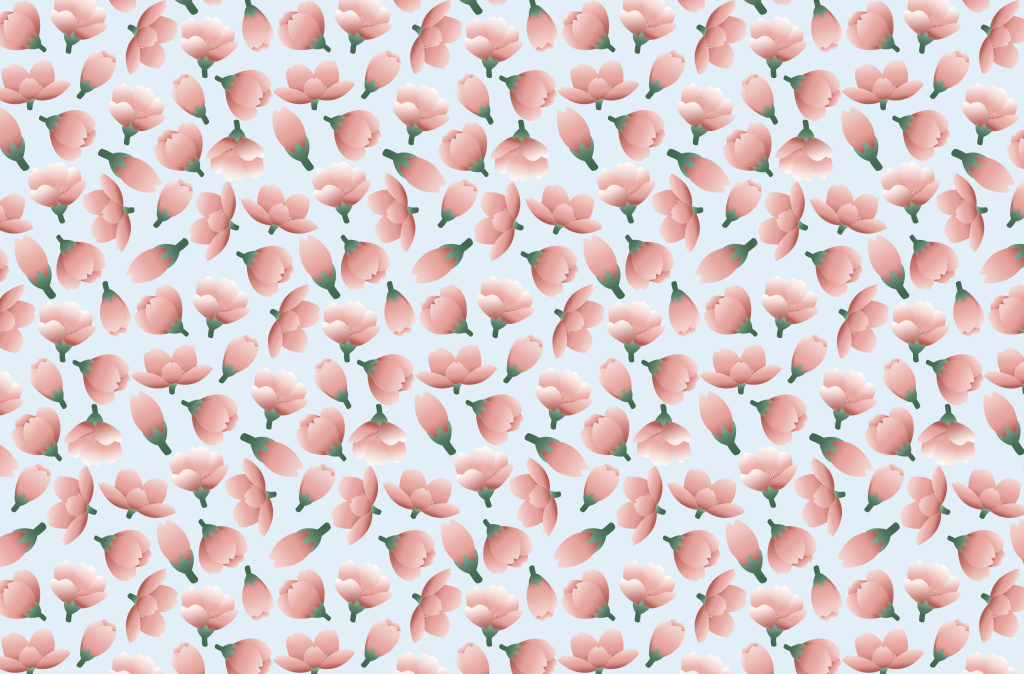
HARUKAZE – 春風
“Spring Breeze”
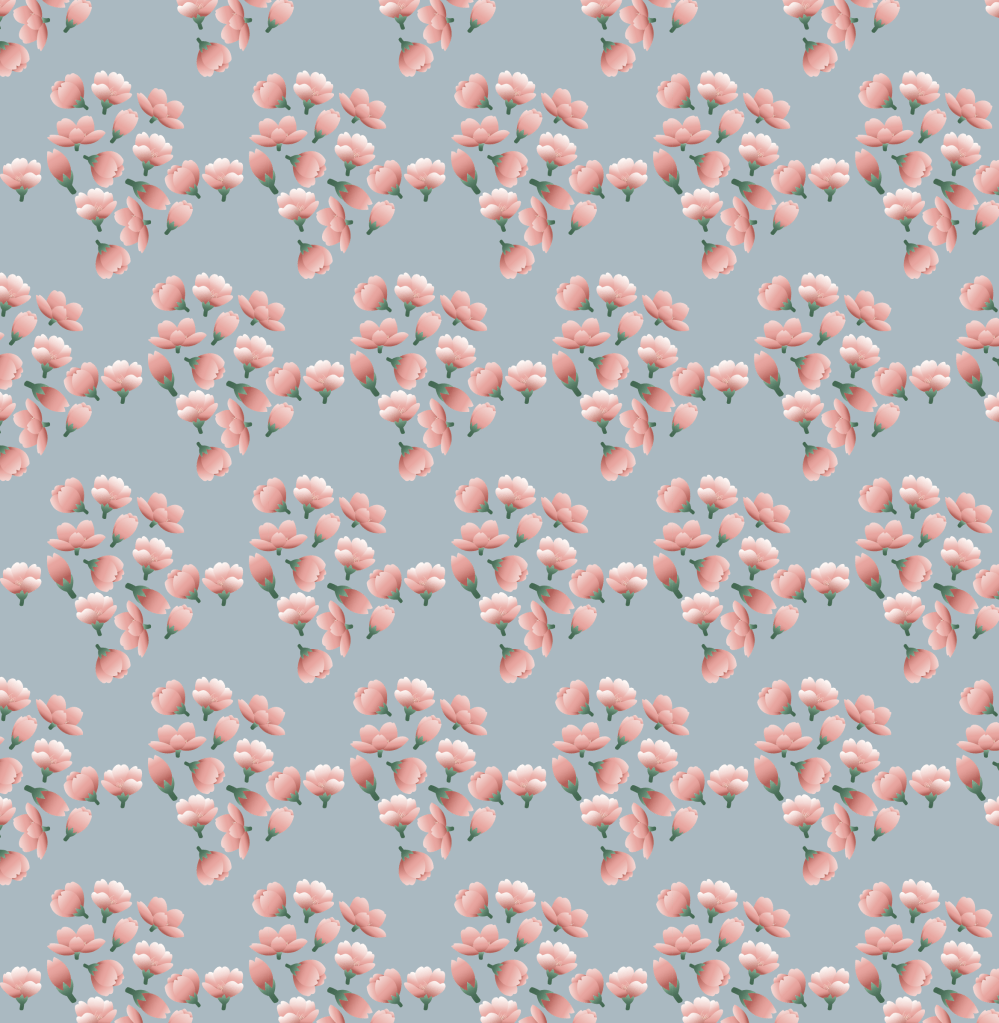
HANA NO MA – 花の間
“Between the Flowers”
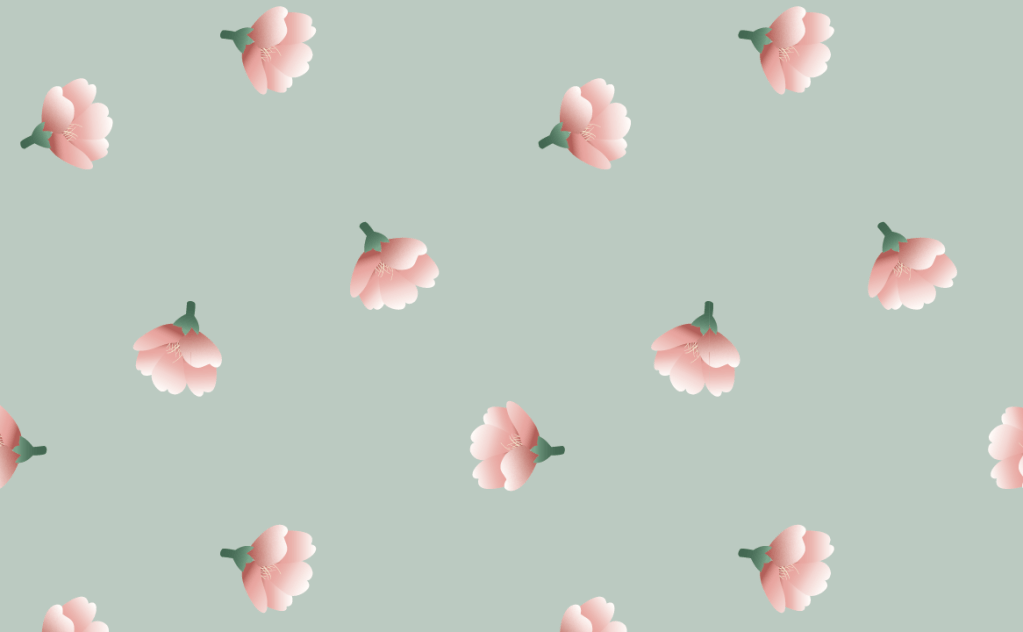
HARUGASUMI – 春霞
“Spring mist”


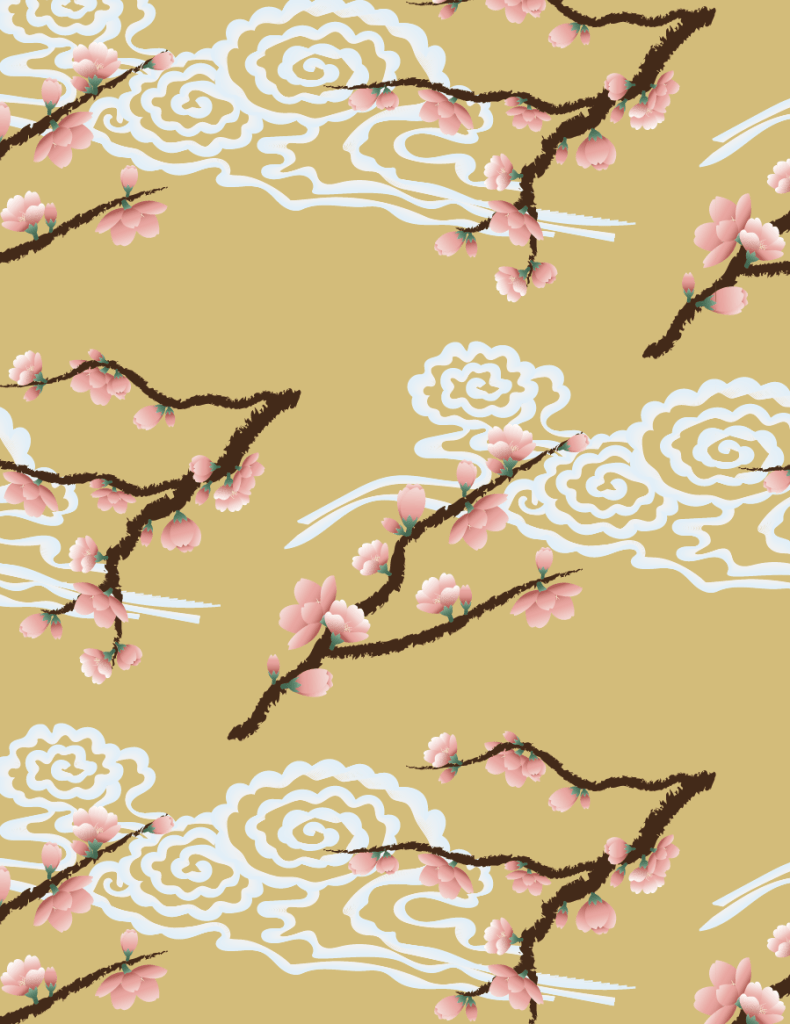
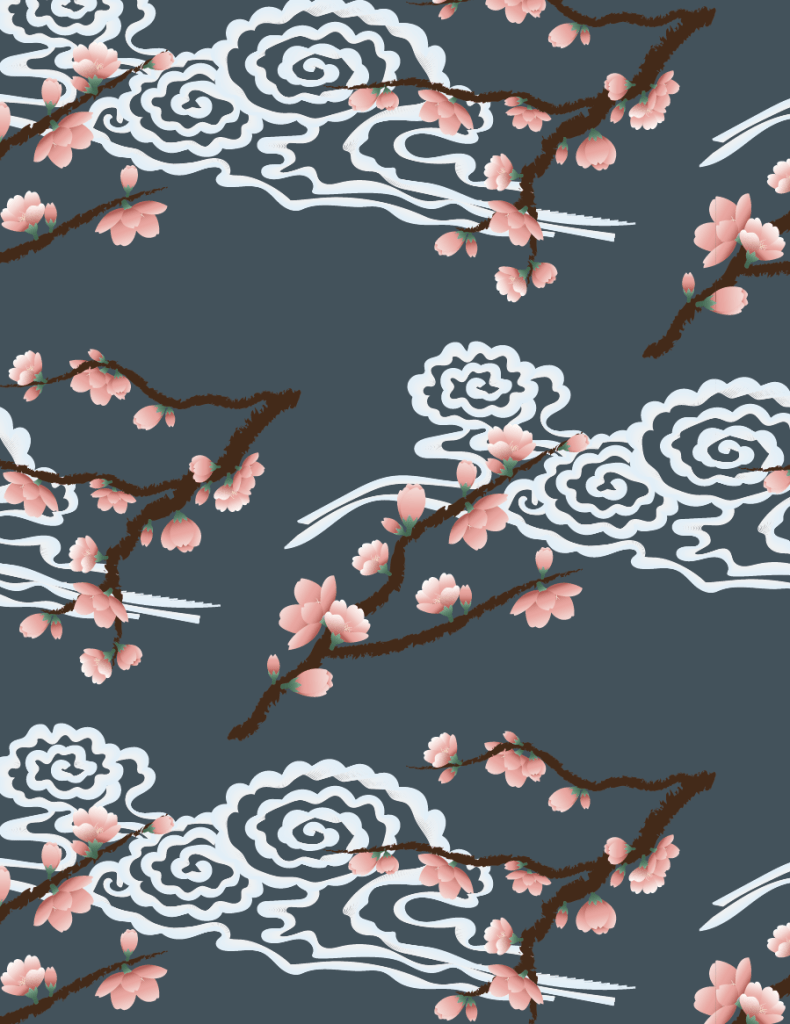
Ukiyo no Eda – 浮世の枝
“Branch of the Floating World”
Rooted in Edo-period culture, Ukiyo reflects the beauty of the fleeting moment — like blossoms in the wind. Eda, meaning branch, connects directly to nature and traditional kimono patterns. Together, the phrase evokes transience, elegance, and the quiet poetry of seasonal change.
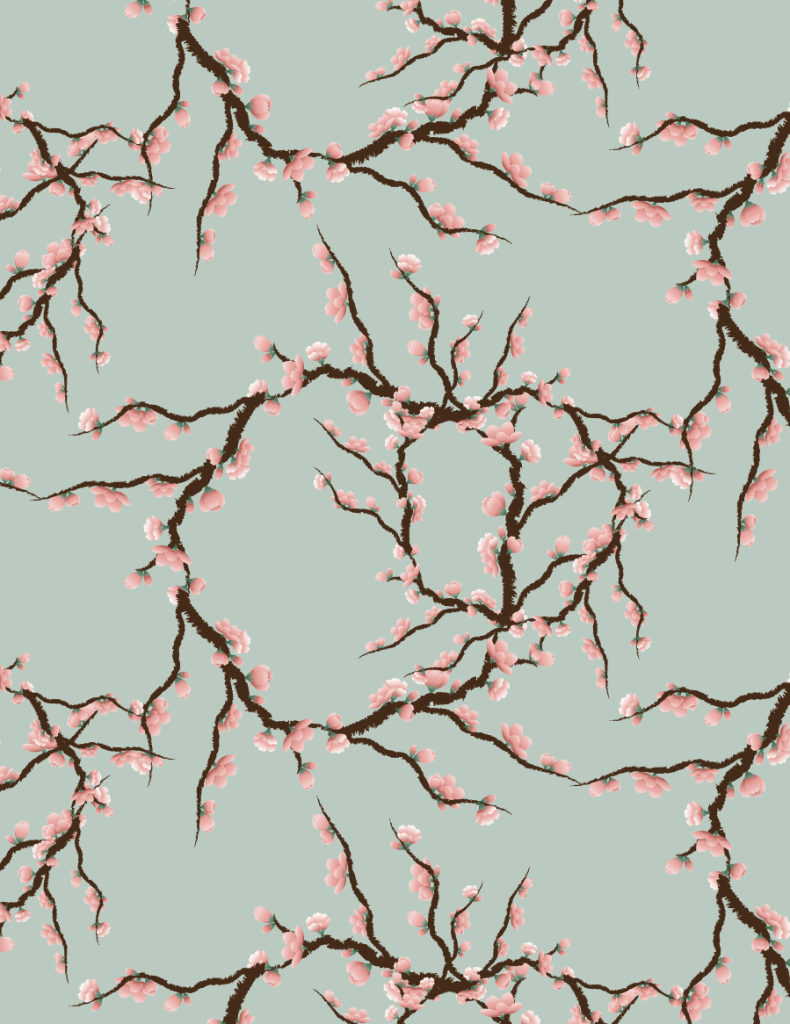
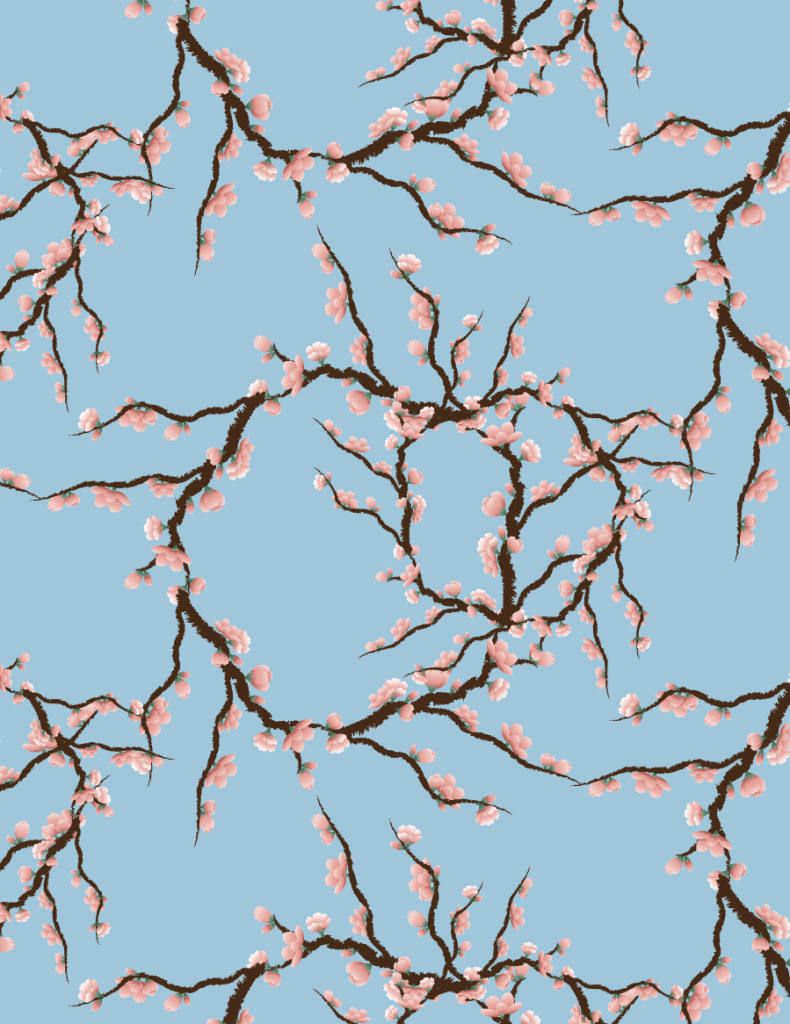
Nagi no Eda – 凪の枝
“Branches in Calm Wind”
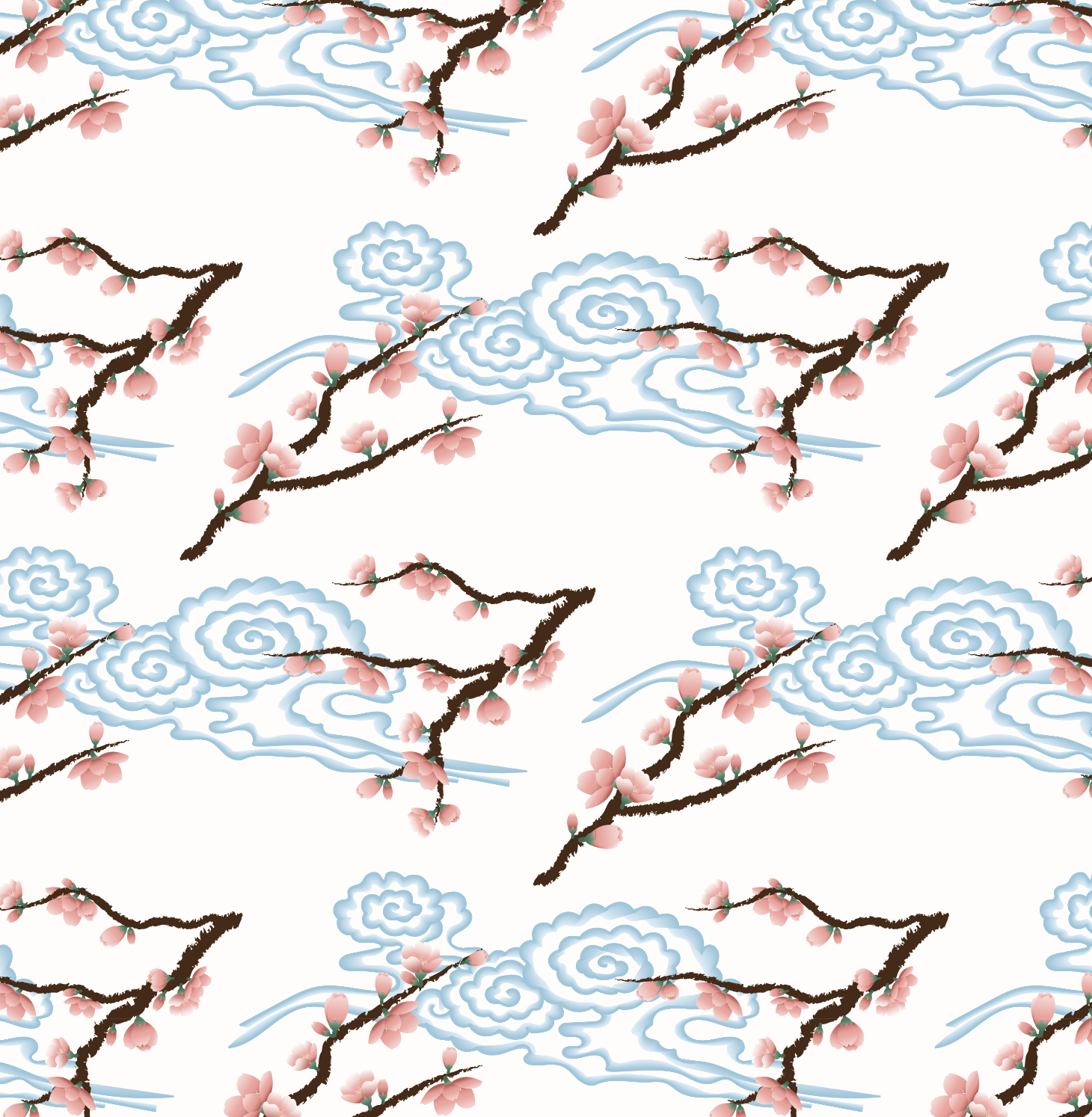
EIEN NO ICHIBU- 永遠の一分
“A Moment of Eternity”

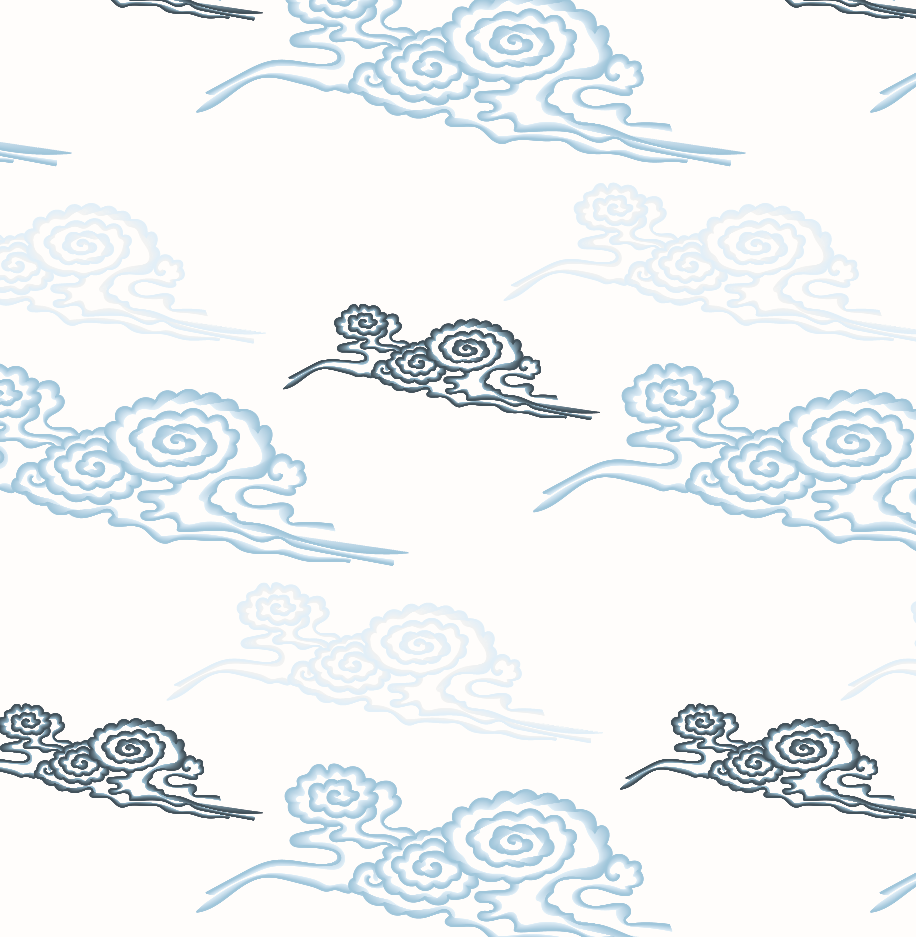
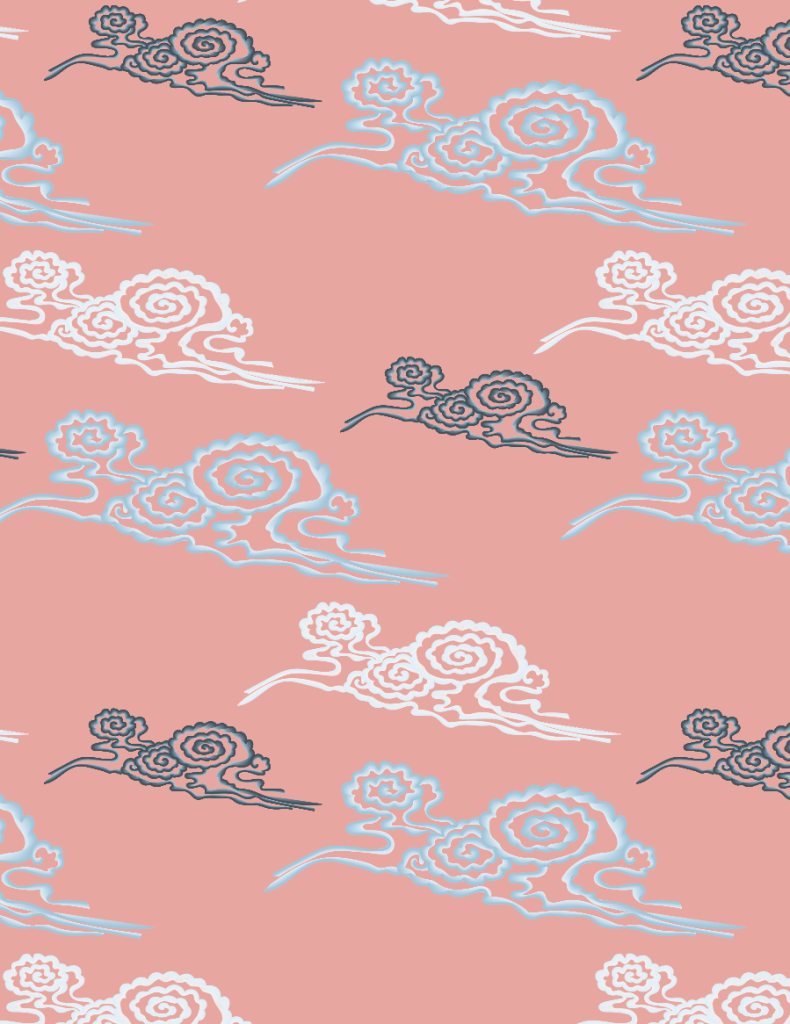
UTSUROI NO KUMO- うつろいの雲
“Branches in Calm Wind”

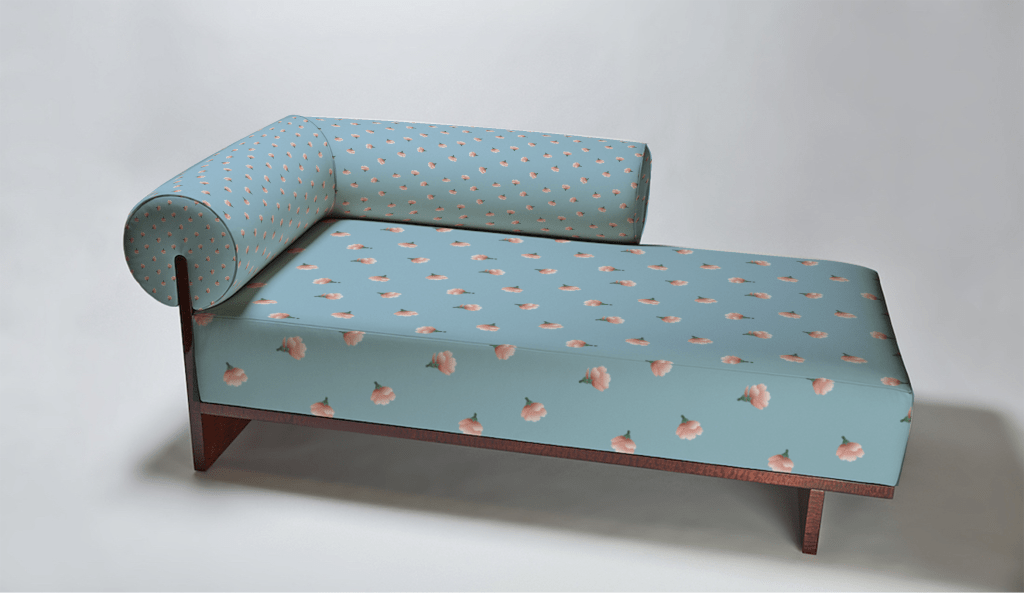
Furniture Mock-ups
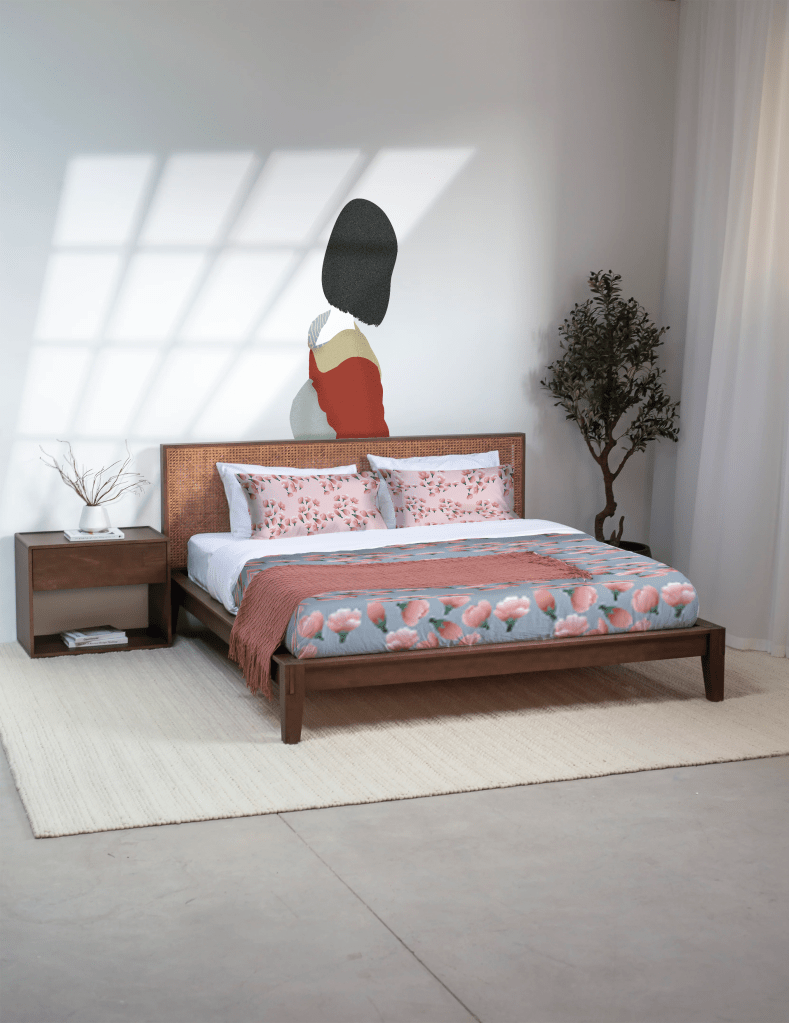
Kimono Mock-ups
 Morgane E. Chalard